

August 2, 2026
In this issue: the impact a New York pulp mill closing will have on Vermont forests, and paths forward; a lucky saw cut avoids danger; and a tip for anyone who's a fan of saving seeds.

Dispatches is published the first Sunday of each month and occasionally at other times. You can read this issue in the email below. If your email system limits the length of emails and you can’t see this entire issue, or if you’d like to read each piece separately and catch up on any past content you’ve missed, you can visit our Substack site.
Big Trouble in Vermont’s Logging Ecosystem
And what comes next...
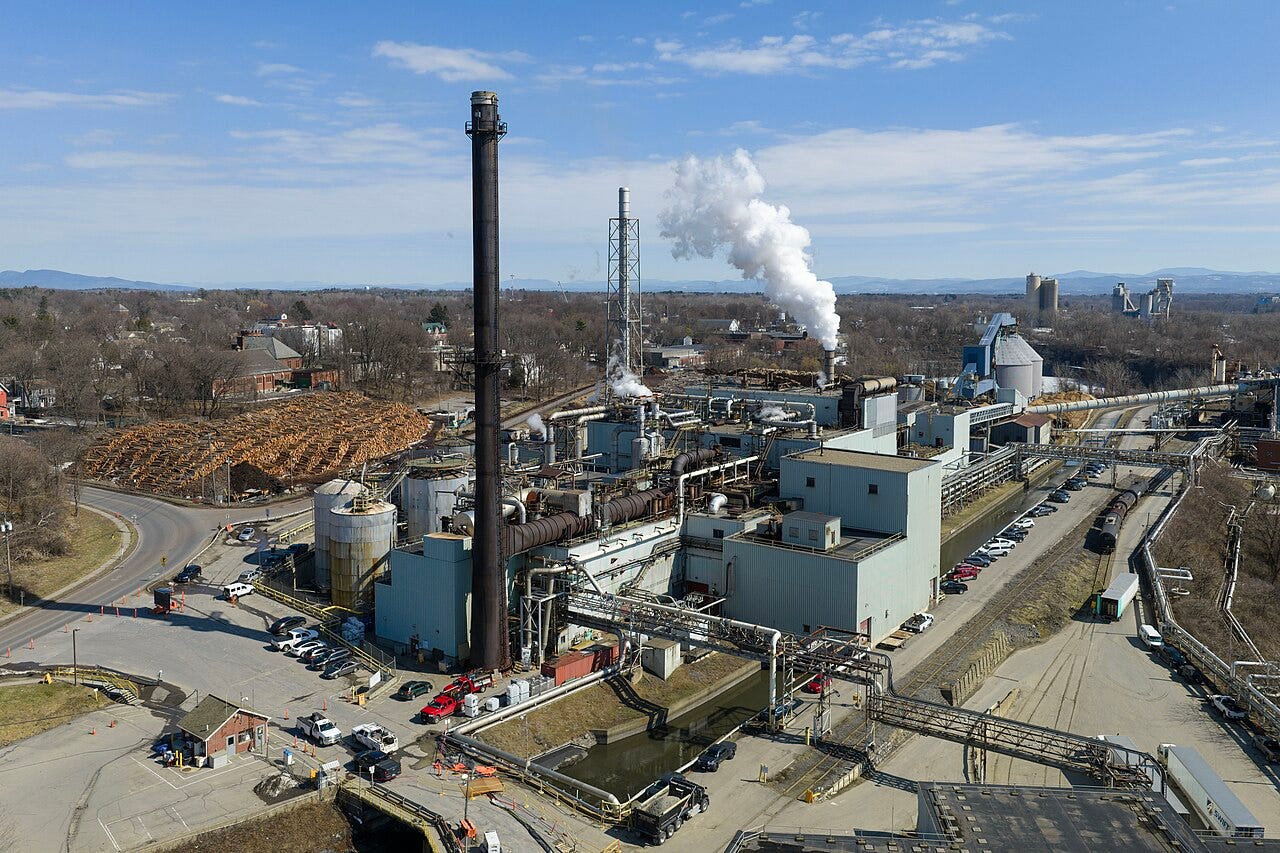
The Finch Paper Mill in Glens Falls, New York, announced unexpectedly* last week that they’d no longer be buying wood in the region, and the shockwaves are rippling through rural Vermont. I added an asterisk to the word “unexpectedly” because while the exact timing was a surprise, there was an expectation that this would eventually happen. The mill dates back to the Civil War-era, and one family owned it for 142 years before it was sold to an international conglomerate. Once the owners of the mill lost their ties to the community, many suspected that it was only a matter of time before this would happen.
The loss of this pulp market is a big deal for forest management in Vermont. One of the bedrock principles of good forestry is that you need to cut poor-quality trees so you can improve the growing stock in a stand. Since pulp mills buy poor-quality logs that are unfit for boards, they’re subsidizing good forest management.
Pulp mills specifically, and low-grade wood markets in general, also allow loggers to ethically harvest trees. You might analogize a fallen tree to a fallen animal. The logger is like a meatcutter who breaks down the carcass into different cuts to sell to different markets. Veneer logs are like tenderloin; prime sawlogs (an actual term) are like prime steaks; pulp logs are like the grind that becomes sausage. All these cuts can exist in the same tree, and so having a pulp market allows the logger to use every bit of the tree that he’s cutting. The alternative is to cut trees and leave the unmarketable parts in the forest, sort of like the way a poacher might jack a deer, cut off the hind quarters, and leave the rest to rot.
I’m 50, and there have always been pulp markets in my lifetime. I asked a forester friend who’s around my age how many pulp mills there were in the northern-New York and New England region when he started practicing forestry in the 1990s, and he said around 20. There are only a handful left today, and without Finch, there’s only one left to serve western Vermont. This last mill, in Ticonderoga, New York, might be able to absorb a little bit of the 2,000 tons of Vermont roundwood that Finch bought every week, but it certainly won’t be able to absorb all of it. And they’re not buying hemlock pulp, so there’s no market at all for that at the moment.
In the daily newspapers, the Finch closure is being framed as a problem for loggers. And I certainly don’t want to blow right past that without giving it its due. Vermont’s forest economy produces $1.4 billion in direct output according to the State, and none of it would be possible without these men and women on the front lines. The loss of this market makes an already hard and economically lean job harder and leaner. But the problem is bigger than loggers. Without low-grade markets, foresters can’t do their job well; the forest landowners who own 80% of the forested land in the state can’t manage their woods well. The forest products industry in the state, which employs about 9,100 people, is an ecosystem with symbiotic relationships between various niches. Pulp mills are like an apex predator at the top of the foodchain. Just like in nature, you can’t just take a layer out of the ecosystem pyramid and expect it not to affect everything else.
The million-dollar question is: what’s going to happen next? Pulp’s probably not coming back. The old plants that are hanging on are burdened with failing 20th-century infrastructure and operating within our 21st-century expectations (living wages; safe work environments; clean discharge). They just can’t compete in a lot of cases with the mills in other countries that have modern infrastructure, or with the countries still willing to tolerate rainbow-colored discharge in their rivers, or with agriculturally produced fiber.
People who pay attention to wood markets have seen this day coming since at least the 1990s, when pulp became a global instead of a regional commodity, and there have been many people working on what might come next. There was buzz around cellulosic ethanol for a while – maybe we could use wood to fuel our cars and trucks. There’s been more recent buzz around textiles derived from wood fiber – maybe we could replace oil-based synthetic garments with wood. It’s interesting to know these technologies exist, but future potential is not going to help the logger with piles of hemlock pulp that had been going to Finch but are now decomposing on a landing.
The Northern Forest Center is a New Hampshire-based non-profit that works in rural communities throughout Northern New York and New England, and one of the things they do is help wood-based businesses innovate and transition. I called Joe Short, their Vice President, and asked him about promising technologies and innovative companies that are using low-grade wood in our region. He told me that he sees three especially promising arenas.
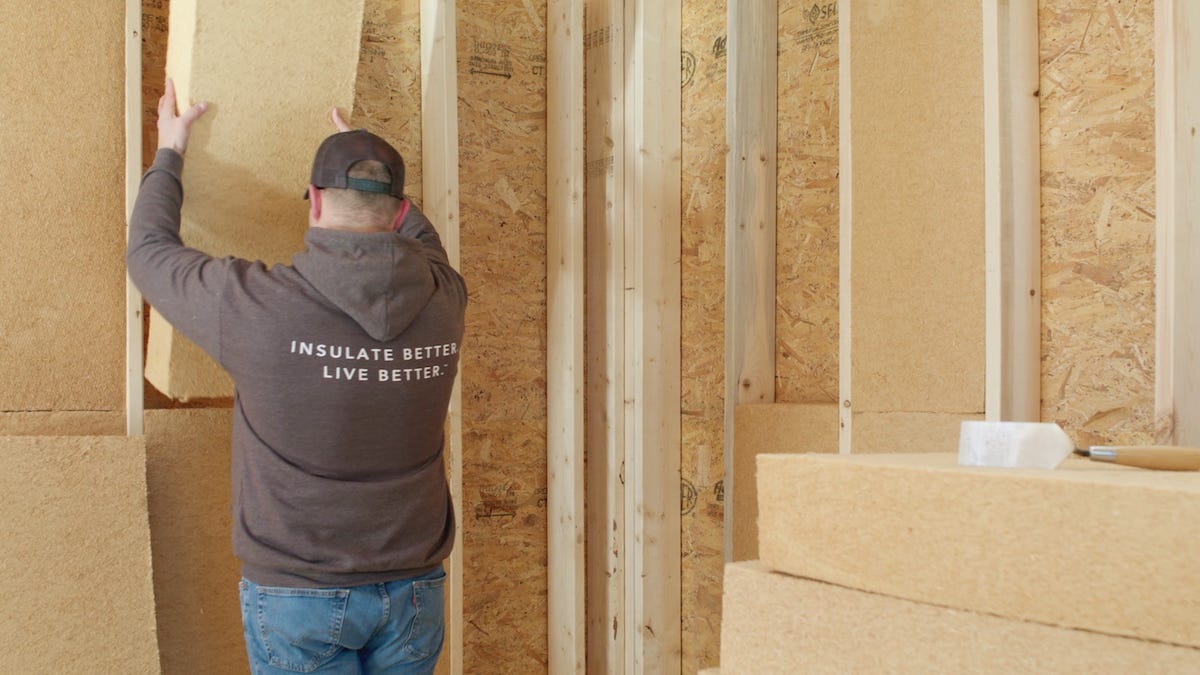
The first is building products. In Madison, Maine, on the site of a former pulp mill, there’s a start-up business called TimberHP that’s making insulation entirely from wood. There has also been a lot of innovation in the mass timber market, and folks are figuring out how to use lower grade lumber and hardwood species in cross-laminated timber, laminated strand lumber, and panels made with roundwood pulp. Short says no one’s making mass timber with regional wood in the Northeast yet, but it’s a proven product that exists in the marketplace. The Northeast is catching up to Canada and Europe, who were on the forefront of this innovation.
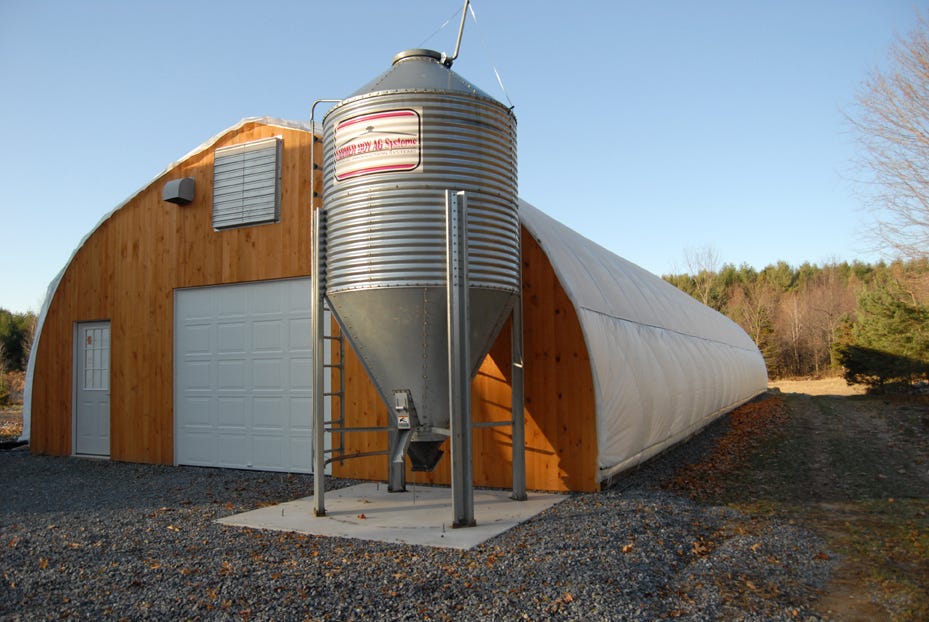
The second arena is energy. Over the past twenty years wood pellets have increased their market share, and if you look you’ll see pellet silos popping up next to more commercial buildings. I was talking to a sugarmaker the other day who’s transitioning to a pellet evaporator. There’s a company called Biofine Developments Northeast in Maine that’s working on a wood-derived heating oil. A wood-based aviation fuel is possible, even if it hasn’t proved commercially viable yet. Then of course there’s wood energy – folks are trying to site a 2.2 megawatt plant in Lyndon that would turn woody biomass into synthetic gas for electricity as I write this.

The third arena is packaging. There’s a company called Tanbark in Maine that’s creating products designed to help people wean themselves off single-use plastic bags and takeout containers. New coatings have made the fiber products less pervious, and there’s hope, Short says, that this industry is primed for expansion.
There are two catches, though. The first is that none of this is going to help much in the near term. “There is no quick replacement for pulp,” Short said.
The second catch, and it’s a crucial one, is that all of this technology and innovation is meaningless if the people of Vermont and the larger Northeast aren’t receptive to it.
“If any of this is going to work over the longterm,” said Short, “we will need to keep and strengthen the social license to practice forestry.”
That’s the crux of it all right there. And at times this can seem harder than creating jet fuel out of trees. But the positive in this mandate is that it’s a place where you and I can get involved and lend our voices.
In my conversation with Short we talked about the challenges businesses are facing as they try to get off the ground, and he observed that public policy can be either incentivizing, disincentivizing, or agnostic where it comes to wood-based products. There’s a personal version of this, too. If we start with the idea that wood is good; that trees are a renewable resource that we have a responsibility to steward and use wisely; that an industrious rural Vermont that’s composed of working fields and forests is better than a stagnant rural Vermont composed of preserved open space, then I have confidence that we can collectively figure out how to have healthy forests and a healthy wood products industry. We should want both of these things. If we start with wood is good, we can consider timber harvests with an open mind. We can thoughtfully evaluate the pros and cons of different forms of energy. Any critiques we have of what’s happening on the ground will be expressed in good faith, which leads to a better process, compromise, better outcomes.
But if we lose this perspective; if the voices calling for standing trees drown out the voices advocating for forest stewardship; if we’re agnostic and don’t care if our single-use bags are paper or plastic or if our heat comes from wood or oil, or if loggers have jobs, or if timberland owners have markets; if communities won’t tolerate industry, then nobody really knows what comes next.
— Dave Mance III
Bill’s Lucky Day
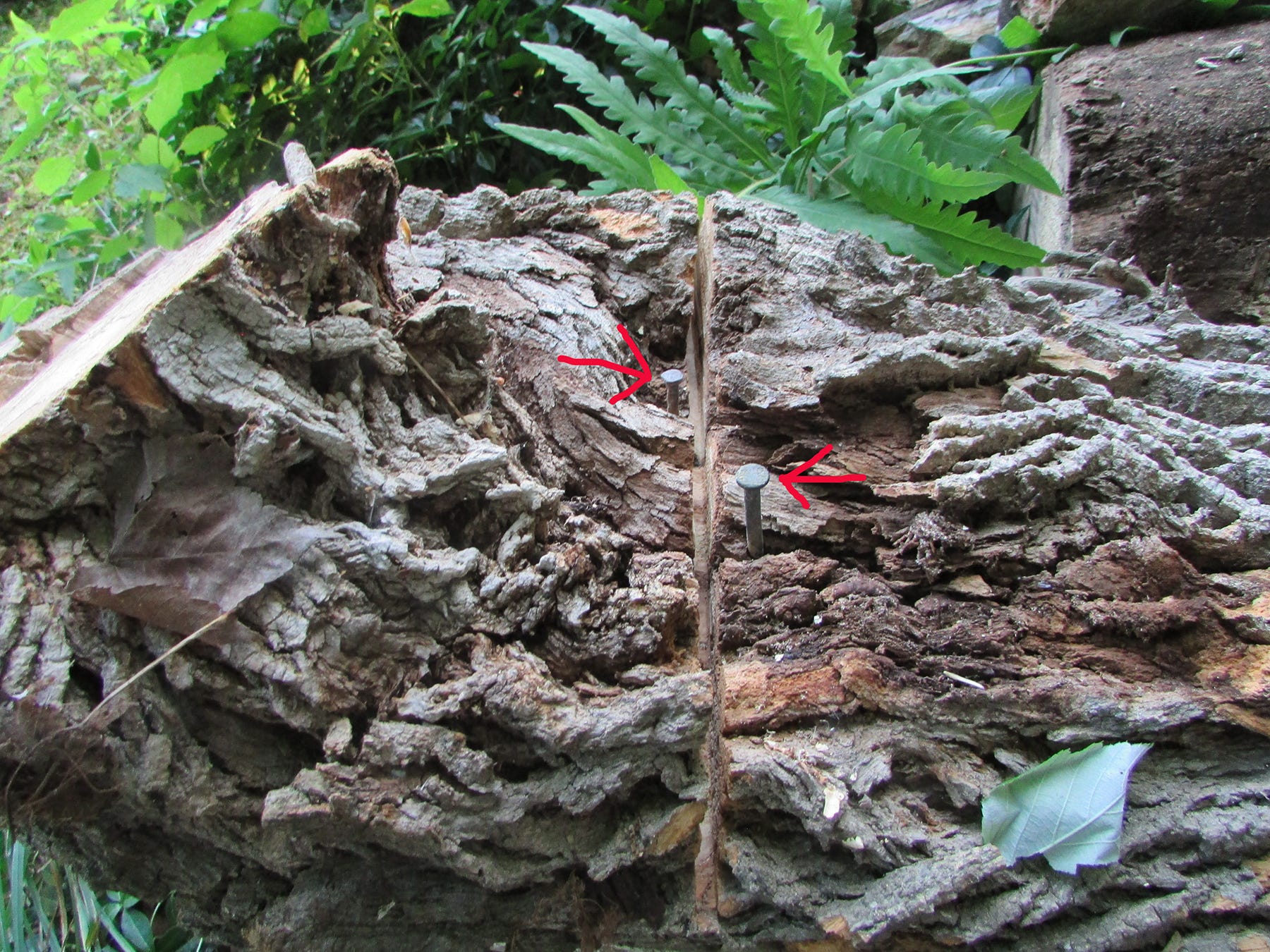
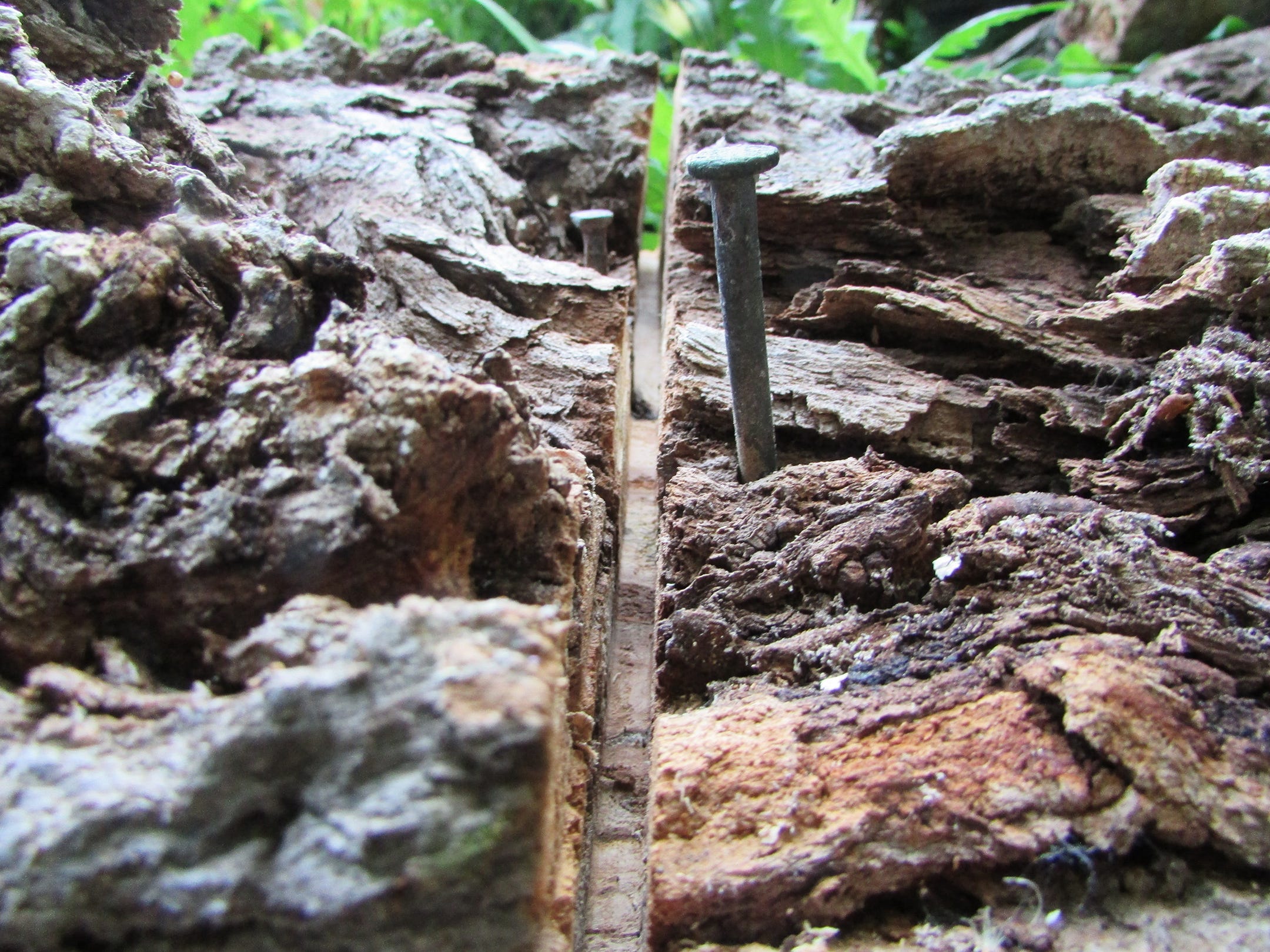
While bucking up the fallen remains of an apple tree that once supported our kids’ tree fort, my husband Bill discovered how lucky he was when he flipped the sections over after cutting them. Those aren’t just nails, they are 7-inch spikes that secured the lumber to the tree. Yikes! He somehow missed them both by a fraction. Can’t be too careful out there…
— Amy Peberdy
Just Use a Fan
From Vermont Almanac, Vol. III
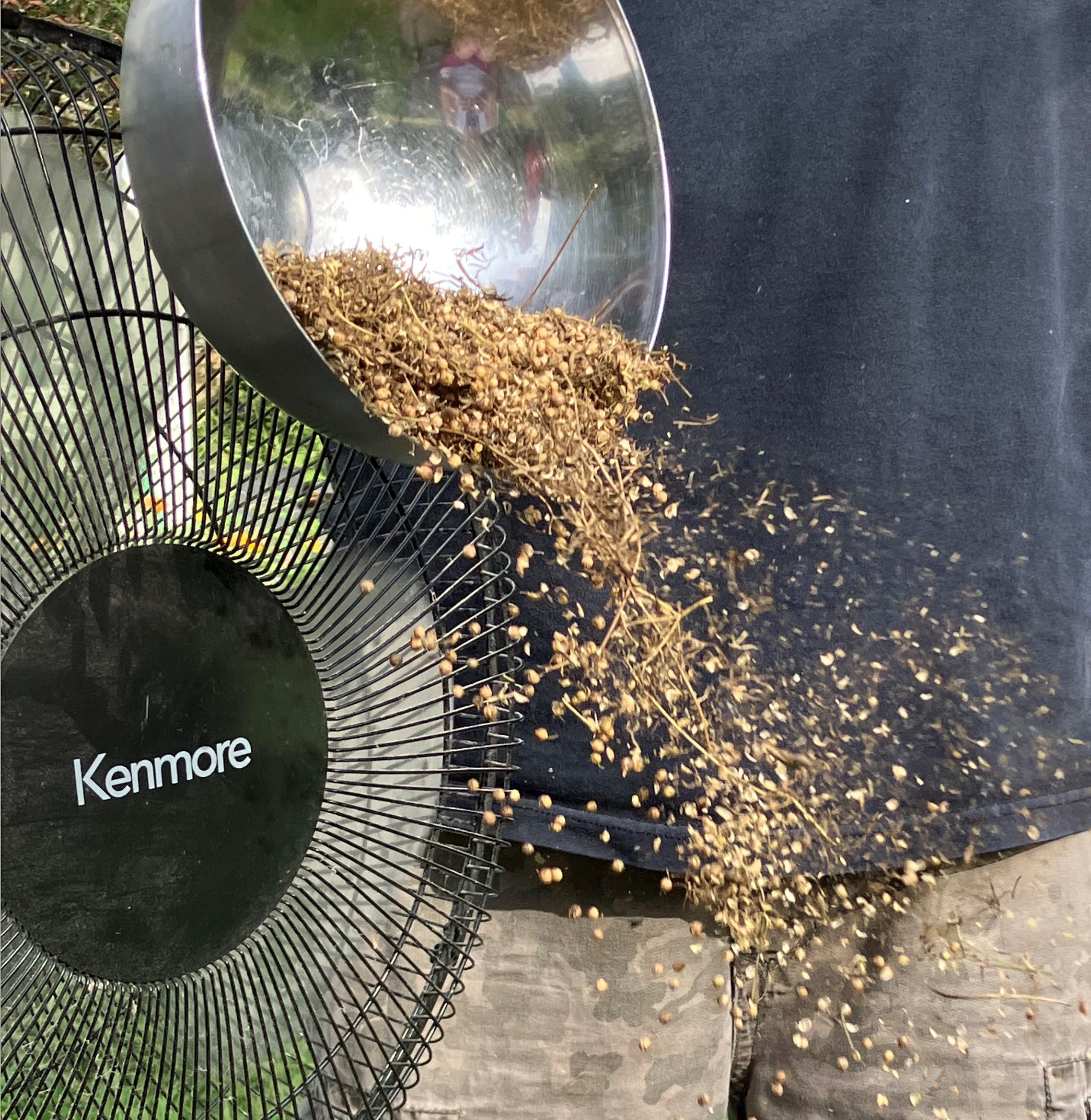
If you home garden with any intensity, you’ll eventually want to save your own seeds, and when you do, you’ll find that threshing can be a pain. When things get tedious, a fan is a useful tool. Here, mature cilantro was harvested and dried in a large cardboard box in a hot vehicle. The seed (known in the spice world as coriander) was stripped from the plant and collected in a bowl. The fan was set on high, a large pot was placed on the ground in front of it, and the contents of the bowl were poured through the wind column. Seed dropped into the pot, chaffe blew away. Thanks to Caleb Goossen for sharing this tip with us.
And very lucky whoever pounded those spikes kept them level.
The Forest Products industry in FINLAND is worth paying attention to?