

June 7, 2026
In this issue: Vermont Agriculture Hall of Fame welcomes new members, a gray tree frog is sitting pretty, the VT Coverts network expands, and the wildlife benefits of delaying haying.

Dispatches is published the first Sunday of each month and occasionally at other times. You can read this issue in the email below. If your email system limits the length of emails and you can’t see this entire issue, or if you’d like to read each piece separately and catch up on any past content you’ve missed, you can visit our Substack site.
2026 VT Ag Hall of Fame Inductees
[Editor’s Note: A special congratulations to Heather Darby, who has been hugely helpful in sharing her expertise with Vermont Almanac over the years.]
The Vermont Agricultural Hall of Fame has announced its 2026 class of inductees, recognizing individuals whose dedication, leadership, and innovation have made a lasting impact on Vermont agriculture.
For more than two decades, the Hall of Fame has celebrated the achievements of farmers, growers, agricultural professionals, service providers, and industry advocates who have helped strengthen Vermont’s agricultural community. Since its founding, the Hall of Fame has honored more than 120 individuals whose contributions continue to shape the state’s agricultural legacy.
In recent years, the program has expanded to recognize excellence across a broader range of accomplishments, including categories for Emerging Leader (under age 40), Agricultural Innovator, and up to three Lifetime Achievement honorees. The strength and diversity of this year’s nominations once again reflected the talent, commitment, and passion found throughout Vermont agriculture.
The 2026 inductees will be formally recognized and celebrated during the Champlain Valley Fair later this summer.
2026 Emerging Leader: This category highlights those who are stepping up to become the next generation of agricultural leaders in Vermont. Age 40 or younger (born after January 1, 1986), these individuals demonstrate a deep commitment to Vermont’s working landscape and are poised to lead our Ag community into the future. They are remarkable for their service, youthful energy, and dedication to Vermont agriculture.
Courtney Banach, Farm worker. Addison, VT
2026 Ag Innovator: Those in consideration for this category have demonstrated a fresh and forward-thinking approach to agriculture. They are making or have made a significant, positive impact on Vermont, in areas such as but not limited to: growing the local economy, promoting stewardship and conservation, improving community health and nutrition, developing new tools and practices, and using alternative models in business and land ownership. They are notable for their unique perspective and unconventional approach. (Age is not a factor for consideration in this category.)
Heather Darby, Service provider in agronomic and soil science. Alburgh, VT
2026 Lifetime Achievement: This category recognizes those who have made a significant contribution to the advancement, improvement, or development of Vermont agriculture over the course of their long career. Nominees shall have played an active role in Vermont agriculture for at least thirty years.
• Dr Ann Hazelrigg, Service Provider. Williston, VT
• Paul Harlow, Farmer. Westminster, VT
• Doug Flack, Farmer. Enosburg, VT
Camouflaged Co-pilot
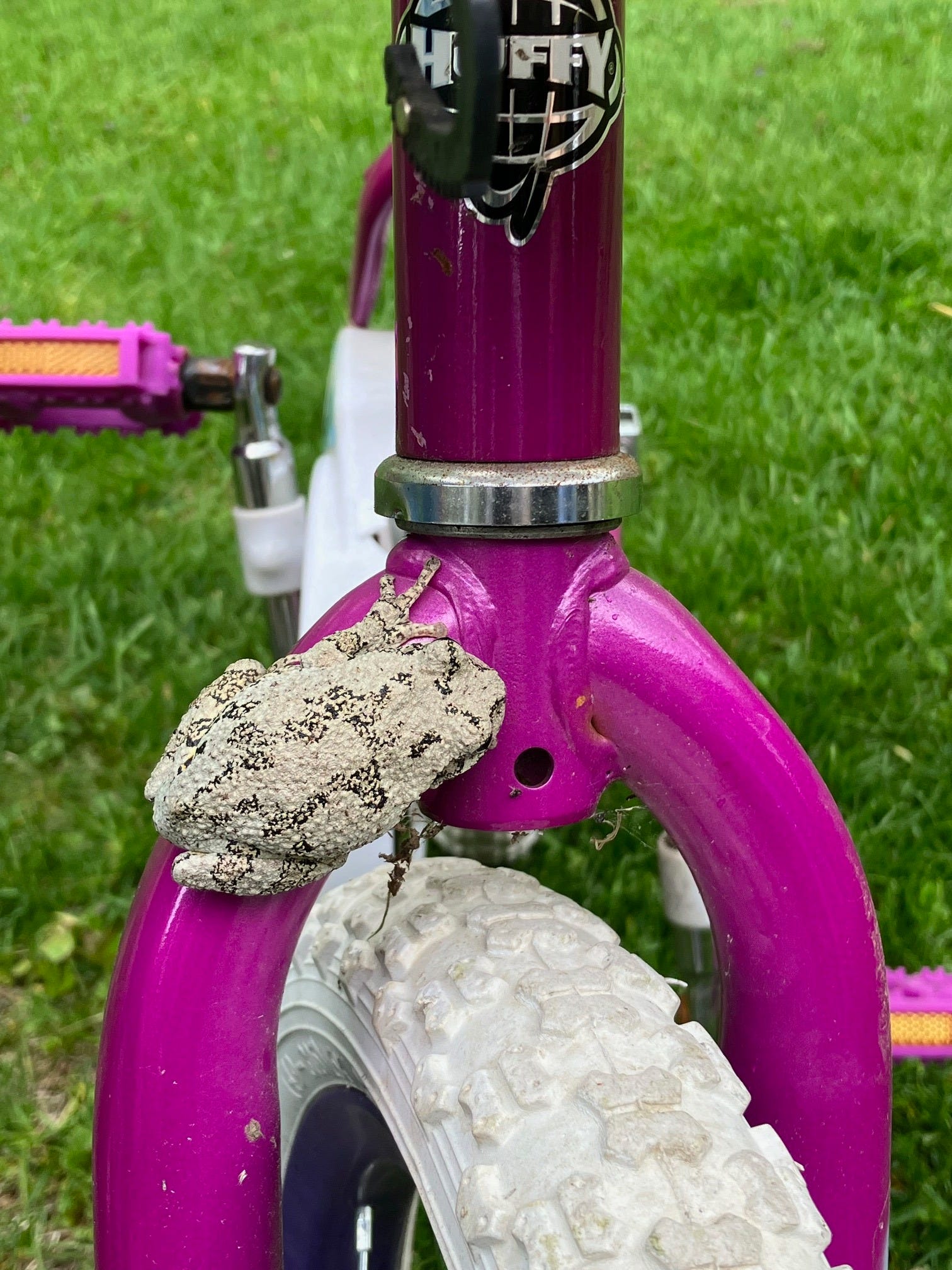
A gray tree frog seemingly waiting to catch a ride.
VT Coverts Expands Stewardship Network
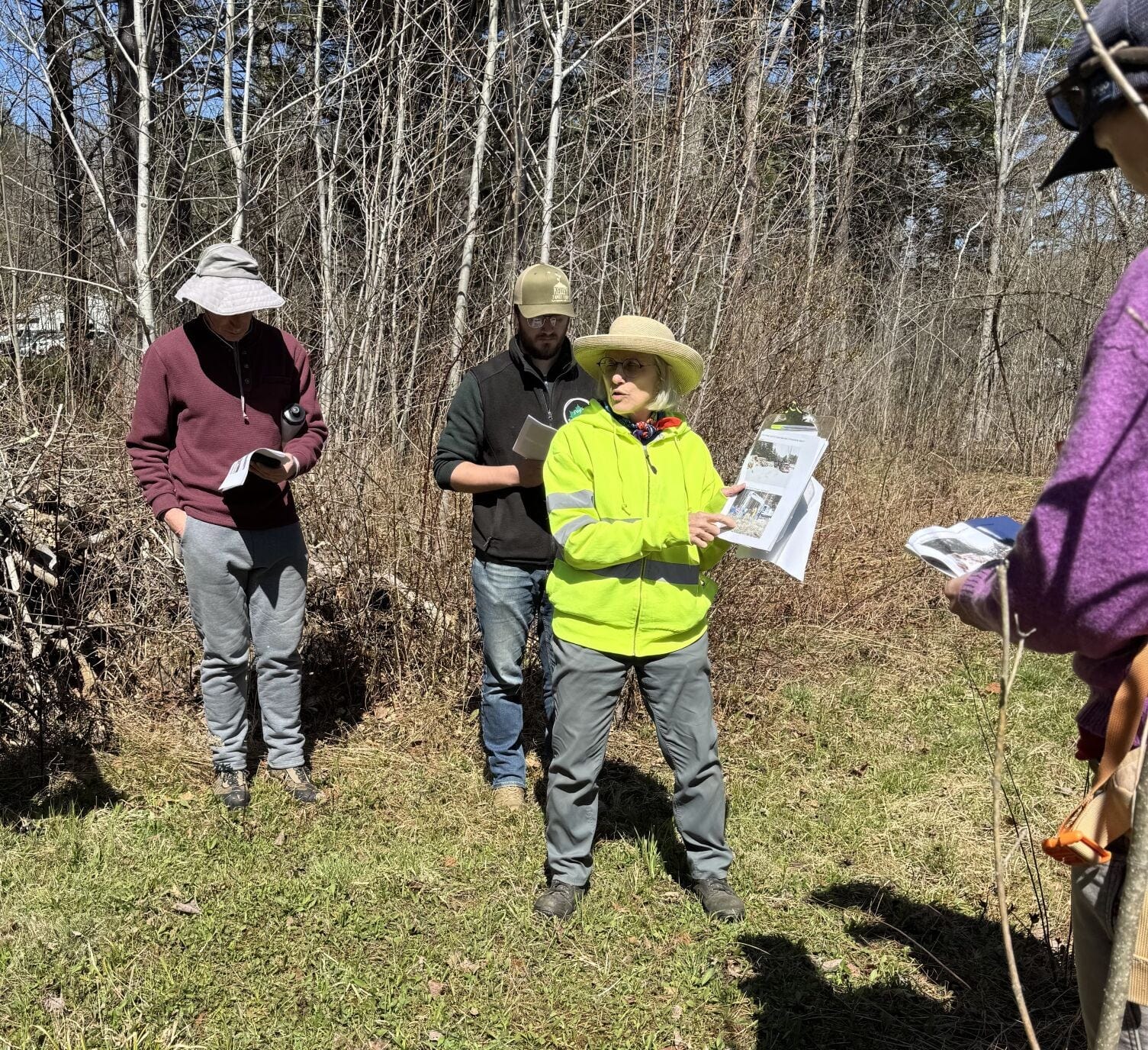
Nearly 45 Vermonters from across the state are stepping into leadership roles in forest and wildlife stewardship following the completion of two cornerstone programs offered by Vermont Coverts: Woodlands for Wildlife.
Together, the programs are strengthening a growing peer-to-peer network dedicated to healthy forests, wildlife habitat, and community-based conservation solutions.
This spring, Vermont Coverts graduated 23 new Coverts Cooperators and welcomed 20 newly trained Bear Ambassadors representing 11 counties statewide. Participants now join a statewide community of volunteers equipped to share practical stewardship knowledge with neighbors, landowners, and local communities.
“With 78% of Vermont’s forestland in private ownership, the decisions individual landowners make have an outsized impact on forest health and wildlife habitat,” said Lisa Sausville. “By training people from across the state, Vermont Coverts ensures stewardship knowledge spreads community by community. These programs empower local leaders to help others care for forests, wildlife, and the places we all value.”
The next Coverts Cooperator Training will take place August 28–30, and registration is now open. The program is designed for landowners and conservation-minded community members interested in learning about forest and wildlife stewardship while joining a statewide network of engaged citizens.
To learn more about Vermont Coverts programs, upcoming training, or living responsibly with black bears, visit Vermont Coverts: Woodlands for Wildlife (vtcoverts.org) or VT Fish and Wildlife Living with Black Bears (vtfishandwildlife.com).
For more than 40 years, Vermont Coverts has served as Vermont’s master forest stewardship program, offering education on forest ecology, wildlife habitat, invasive species, emerging forest threats, and community outreach. With this year’s graduating class, the organization has now trained more than 975 Coverts Cooperators statewide.
The name “Coverts” comes from an old English word meaning cover or thicket, reflecting the organization’s long-standing commitment to creating healthy, diverse forests that support wildlife.
Participants consistently describe the experience as transformative.
“On Monday morning, the day after the training finished, I walked some of the trails I have been walking for years,” shared one recent Cooperator graduate. “I felt like my eyes and ears were fully open for the first time.”
Another participant reflected on the strong sense of community fostered during the training: “What an incredible weekend! I am so proud to be called a Vermont Coverts Cooperator. I am looking forward to incorporating my new-found knowledge as I maintain our woodlands and speak with friends and neighbors.”
Many Bear Ambassador participants are also Coverts Cooperators, extending the organization’s peer-to-peer model into wildlife coexistence education. Developed in partnership with the Vermont Fish & Wildlife Department, the Bear Ambassador Program equips volunteers with tools to reduce human-bear conflicts and promote practical coexistence strategies within their communities.
Since the program launched in 2024, 57 Vermonters have completed the training. Participants learn about black bear biology and behavior, attractant management, and effective ways to communicate with neighbors about reducing conflicts.
“Many people who experience a bear visiting their home turn to their neighbors and friends to share the situation,” said Jackie Comeau, Vermont Fish and Wildlife Biologist. “This program gives community members the tools to share helpful information that can improve coexistence.”
Bear Ambassadors are trained to provide community presentations, offer site-specific suggestions to reduce bear conflicts, and connect residents with appropriate agencies and resources for additional assistance.
“Community outreach is key to reducing human-bear conflicts,” added Sausville. “When neighbors share simple actions like taking down bird feeders, securing garbage, and being bear-aware, we can make a real difference.”
One new Bear Ambassador graduate noted, “I look forward to responding with new knowledge to help a neighbor understand the reasons for doing things like taking in your bird feeder.”
Because over 78% of Vermont forests are privately owned, programs like Vermont Coverts play a critical role in maintaining healthy ecosystems and connecting wildlife habitat across property boundaries. Through education and neighbor-to-neighbor outreach, participants help ensure long-term benefits for forests, wildlife, and future generations.
Delaying Haying
From Vermont Almanac, Vol. III
An ethereally whistled “spring of the year” emanates from a sea of waist-high golden hay. After scanning the field, a bird in the distance comes into focus: a yellow breasted, black necklaced, eastern meadowlark perched on a fence post. While these ground-nesting grassland birds were once widespread across Vermont, their populations have been declining for decades. Meadowlarks are now primarily found west of the Green Mountains, with only scattered populations elsewhere. In 2022 they were listed as State Threatened.
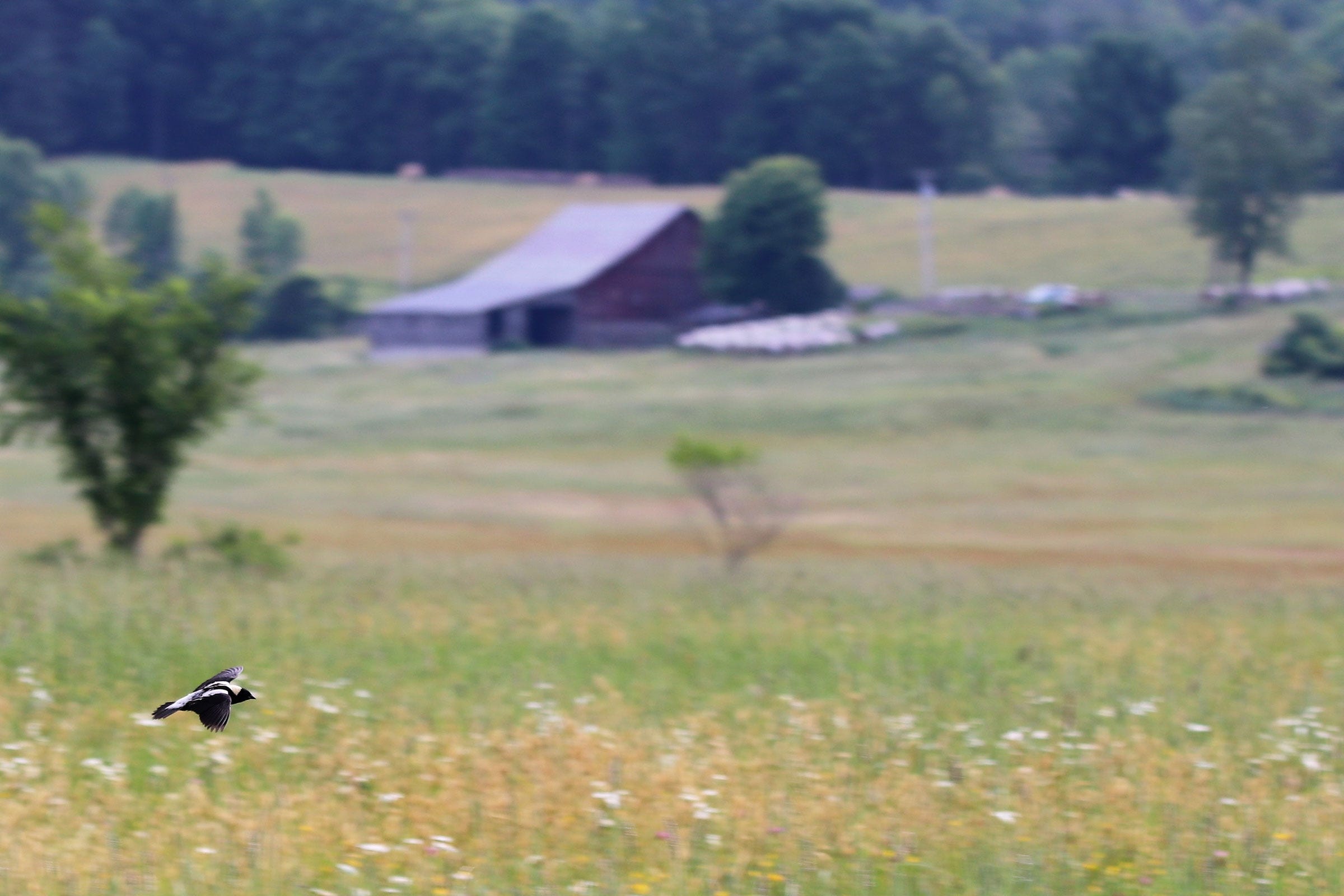
Eastern meadowlarks aren’t the only grassland species in Vermont to experience such a significant decline: breeding upland sandpipers (Endangered) are thought to be present only in single digits, while Henslow’s sparrows (Endangered) haven’t been observed in Vermont for decades. Bobolinks, while currently much more widespread than meadowlarks, are also considered a Species of Greatest Conservation Need.
These declines have been primarily driven by changes in land use throughout their breeding range. A shift in Vermont from sheep to dairy has reduced the total area of pasture. Increasingly frequent haying during June and July can destroy nests and prevent successful fledging, rendering fields as population sinks. Additionally, reforestation and development have resulted in the fragmentation and parcelization of fields, reducing the average size. A lack of active management also presents issues for grassland habitats. When fields are no longer hayed, woody shrubs grow and make the fields unsuitable for breeding within a matter of years. For grassland birds, which rely on large and unbroken tracts of hayfield, this greatly reduces available breeding habitat.
Despite their historic decline and present-day challenges, it’s not too late to stem the trend. Increased farm conservation has helped, as has “delayed haying,” a practice where farmers leave hayfields untouched between June 1 and August 1 to allow time for nesting. The strategy is to take a first cut of hay and apply manure by June 1. A farmer can then take a second cut after August 1. While this can result in lost revenue, financial incentive programs – including The Bobolink Project (bobolinkproject.com) – are available to qualifying landowners.
Hayfields and the birds that nest in them are part of Vermont’s agricultural history and identity. By working together and conserving grassland habitat when feasible, we can protect these species well into the future. Join me in appreciating these species, and being an ambassador for their conservation.
– Kevin Tolan